Just recently I attended the #beyondlaptops conference Yokohama International School. The conference itself was one of the most beneficial and productive professional development conferences I have attended. Due to the intentional focus on the interests of the participants, the conference truly gave me space to contemplate my vision for education while surrounded by innovative and passionate educators.
Unconference sessions, allowed us to discuss and to think about how technology can infuse learning in a positive way without the focus of the tools themselves. I felt that this focus was incredibly refreshing as I feel myself sometimes slipping into the mode of focusing more on the tools I am using rather than on the core concepts my students are learning.
I was able to develop a vision for my teaching next year. This current school year I focused a great amount of energy on developing my students as adaptive learners by integrating technology. Next year, I’d like my focus to be on challenge based learning, student driven work time, and social networking. While these items might appear disjointed, my vision for my classroom next year is one in which they are seamlessly blended.
Because I am the type of person who simply can’t go to a conference without testing something out the very next day, I recently decided to allow my students the opportunity to decide what to work on and when to work on it. This thought stemmed from conversations we had at #beyondlaptops as well as from my thoughts on my own learning style.
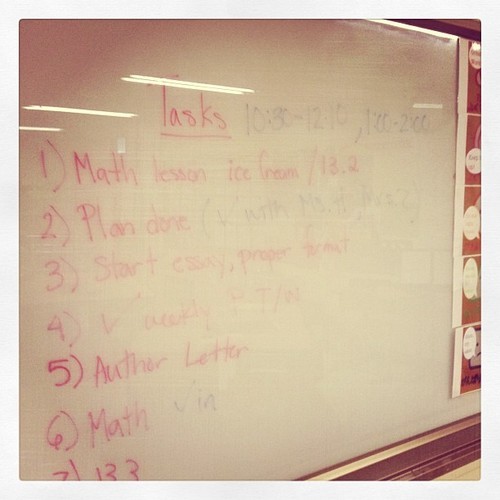
Wednesday of this week, I came to school and wrote on the board a simple list of tasks that my students needed to accomplish that day. They ranged from planning an essay, to taking a math assessment, to completing a Google Form for me, and more. The tasks did not need my direct instruction save from a math lesson, so I thought this would be an ideal day to experiment.
As my students walked in, unpacked their bags, and sat down, I thought through the approach I would take in explaining our little trial run of an unstructured school day. “Today we are going to have the opportunity to choose what to work on and when to work on it. The list of tasks on the board need to be completed by the end of the day, but they can be done in any order you like.”
Students contemplated the oddness of what I said, so we worked through some class questions and discussed the ins and outs of my expectations for the day. Basically, there were certain assignments I needed to check. I would be conferencing with students on a reading assignment throughout the day. If they were taking the math assessment then they needed to sit at a certain table, etc.
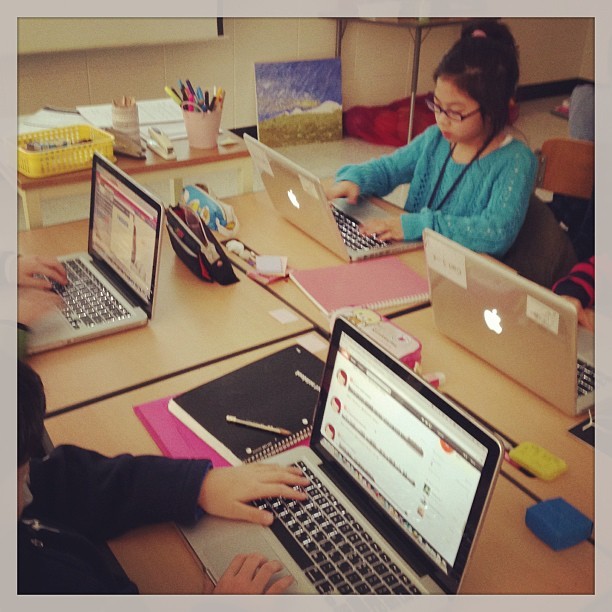
So, in we dove. And, to my excitement I had 17 incredibly engaged and productive students for the entire time leading up to our 10 AM recess. During the morning sessions, I was able to individually work with students on their writing as well as check in with a few students on their math work.
As a ticket out the door, students simply wrote down on a scale of 1 to 10 how they felt the morning went with a flexible schedule. The lowest number I received was an 8 (note, 1 was horrible and 10 was great).
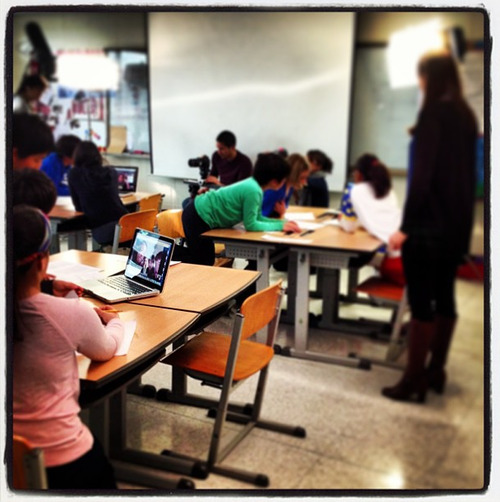
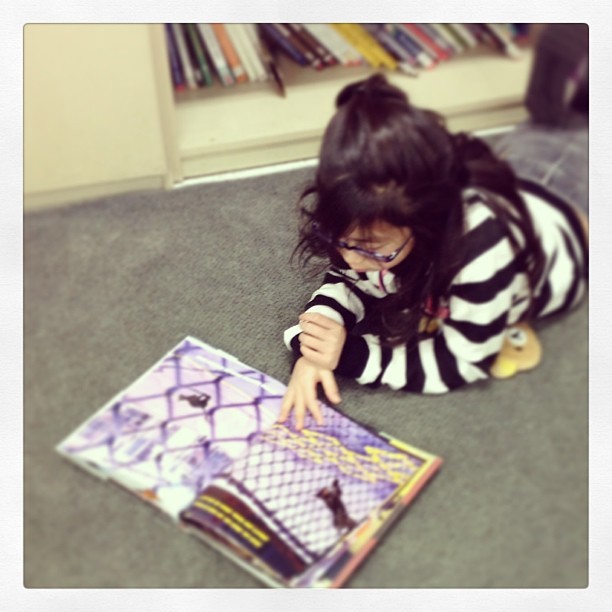
The afternoon continued as planned with our unstructured time continuing. I saw groups of students moving about the room working in a variety of places and combinations. Some chose to move to the carpet area, others stayed at their desks. Students felt fine coming to me for questions, but seemed to rely more upon classmates due to the lack of “sage on the stage” from me.
It was an exciting experiment and as a follow up, I had the kids write a blog post or an email to me about how they felt the unstructured schedule went and how it affected their learning. Here are a few sound bites (unedited) from their writing:
—”I liked today’s experiment because it was fun when everyone was in different places that you have to ask the teacher for help which is helpful to me because I never ask the teacher anything.”
—“If we finish something that is written on the board, we could do another thing that was on the board and it was one way of getting flexible. I also got a chunk of work done on time which was fantastic and great. So overall, I would like another day like this later on during school.”
—”I think that this new system will work out well, and I like it because it is something new and it gives some freedom to the kids at school instead of giving them so much pressure in class.”
—“I thought this was a great experience because I felt that I learn better when I am given choices. I finished my math test at the end of the day because I was more awake, and more ready for the check-in. It affected my learning by me being more active and attentive for each task. “
Overall, the experiment is going incredibly well! Today I performed our second round and made a few changes. Below is a brief list of how I “structured” our “unstructured” time:
1. Tasks to complete that day are written on the board.
2. If computers are only available at certain times, write on the board when they are.
3. Clarify tasks before unstructured time begins.
4. Once they are explained, ask students to write out a plan for themselves of the order they are going to complete the tasks in and how long they think each will take them.
5. Check over their plan, make suggestions if needed.
6. Let the fun begin!
Note: If an assessment is being given, but you want kids to be able to take it at a variety of times, today we discussed in class that it would be best if they could go to another room, to the library, or just to a more quiet place.
Note: Lessons that need direct instruction can be done in small group settings. You could write on the board the certain times you’ll offer the lesson. But note too, that my kids today thought that it would be nice if there were some times during the day that we could have class all together. So that could be a good way to almost break up the unstructured time as some kids can tend to weave off task.